
Food Truck Mobile Ordering App
Project Duration: May 2022 – Feb 2023
Role: Lead UI/UX Designer, User Researcher
Project Type: Google UX Design Certification Program – Final Project
This project was created as my final project for the Google UX Design Certification Program. The goal was to design a mobile ordering app that helps users find nearby upscale food trucks, place orders in advance, pay through their phone, and pick up their food quickly without a long wait.
The app was designed for busy users who want a faster, more convenient, and more modern way to interact with food trucks.
TOOLS: Adobe Illustrator, Figma, Adobe Photoshop
UI/UX DESIGN
The Product
The product is a mobile app that allows users to place food truck orders in advance from nearby locations. The app helps users browse food trucks, view menus, pre-order meals, pay seamlessly through mobile payment options, and track expenses in one simple experience.
The main purpose of the app is to create a swift and hassle-free pickup process for users who do not want to wait in line or deal with limited payment options.
The Problem
Users want a faster and more convenient way to interact with food trucks, including paying with their phone, pre-ordering for pickup, and managing their expenses.
Current food truck experiences often lack these features, leading to delays, missed opportunities, and frustration for users seeking a seamless and modern ordering process.
The Goal
Design a mobile app that allows users to easily locate nearby upscale food trucks, place orders in advance, pay seamlessly through mobile payment options, and track their expenses.
The goal was to create a quick, contactless, and hassle-free pickup experience.
My Role
I worked as the Lead UI/UX Designer and User Researcher for this project.
I was responsible for the full UX design process, from research and strategy to wireframes, prototypes, usability testing, visual design, and final design iteration.
Responsibilities
- Conducted user research through surveys to identify pain points and user goals.
- Defined user personas, problem statements, and user journeys based on research findings.
- Created user flows and low-fidelity wireframes to map the app experience.
- Designed high-fidelity mockups and an interactive prototype using Figma.
- Conducted usability testing and implemented feedback to improve usability.
- Focused on key features like mobile payment, pre-ordering, pickup flow, and expense tracking.
- Ensured the design aligned with user expectations for speed, convenience, and clarity.
Understanding the User
The Product
The product is a mobile app that allows users to place food truck orders in advance from nearby locations. The app helps users browse food trucks, view menus, pre-order meals, pay seamlessly through mobile payment options, and track expenses in one simple experience.
The main purpose of the app is to create a swift and hassle-free pickup process for users who do not want to wait in line or deal with limited payment options.
The Problem
Understanding the User
User Research Summary
The goal of the user research was to identify and understand common behaviors, emotions, and pain points users experience when ordering and paying for food at food trucks.
Through a structured survey, I gathered insights on how users typically pay, whether they order alone or in groups, and what aspects of the ordering process they find frustrating or would like to improve.
Key themes that emerged included a desire for faster checkout, mobile payment options, better control over expenses, and the ability to pre-order for convenience. These insights directly informed the design of a mobile app aimed at streamlining the ordering and payment experience.
User Pain Points
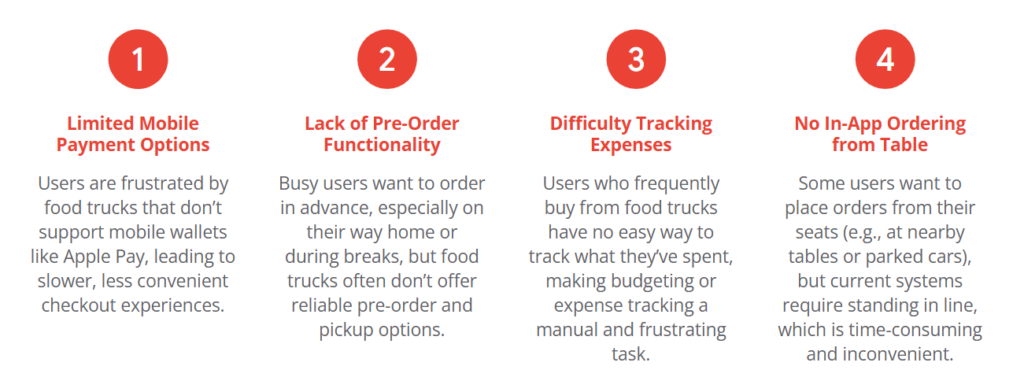
Limited Mobile Payment Options
Users were frustrated by food trucks that do not support mobile wallets like Apple Pay, leading to slower and less convenient checkout experiences.
Lack of Pre-Order Functionality
Busy users wanted to order in advance, especially on their way home or during breaks, but food trucks often did not offer reliable pre-order and pickup options.
Difficulty Tracking Expenses
Users who frequently buy from food trucks had no easy way to track what they spent, making budgeting or expense tracking a manual and frustrating task.
No In-App Ordering from Nearby Locations
Some users wanted to place orders from their seats, nearby tables, or parked cars, but current systems required standing in line, which was time-consuming and inconvenient.
Personas
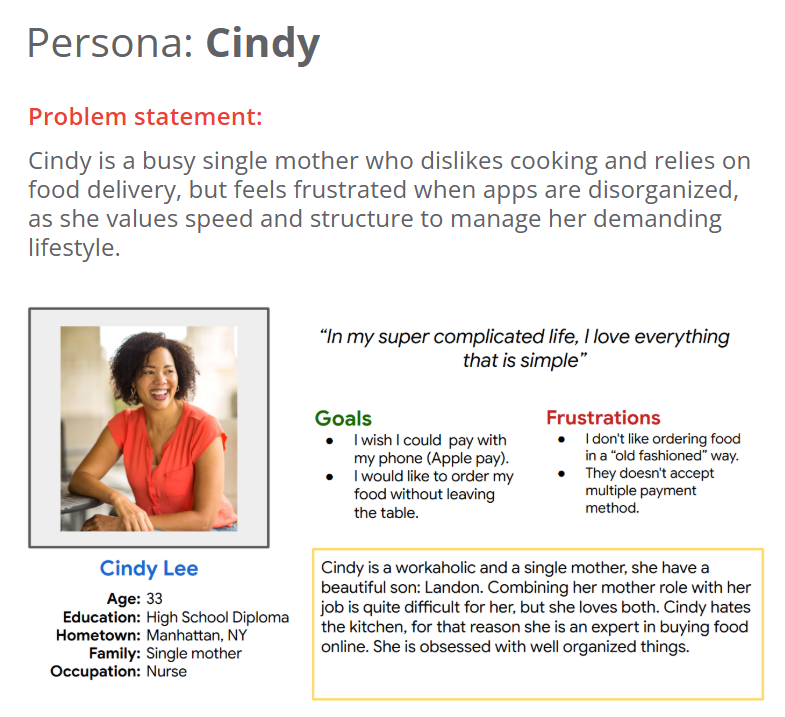
Persona: Cindy
Problem Statement
Cindy is a busy single mother who dislikes cooking and relies on food delivery, but she feels frustrated when apps are disorganized. She values speed and structure to manage her demanding lifestyle.
Quote
“In my super complicated life, I love everything that is simple.”
Goals
Cindy wants to pay with her phone using options like Apple Pay.
She wants to order food without leaving her table.
Frustrations
She dislikes ordering food in an old-fashioned way.
She feels frustrated when vendors do not accept multiple payment methods.
Summary
Cindy is a busy single mother and nurse living in Manhattan, New York. Combining her role as a mother with a demanding job makes her schedule difficult to manage. She does not enjoy cooking, so she frequently buys food online or from nearby food vendors. Cindy values organization, speed, and simple digital experiences that help her save time.
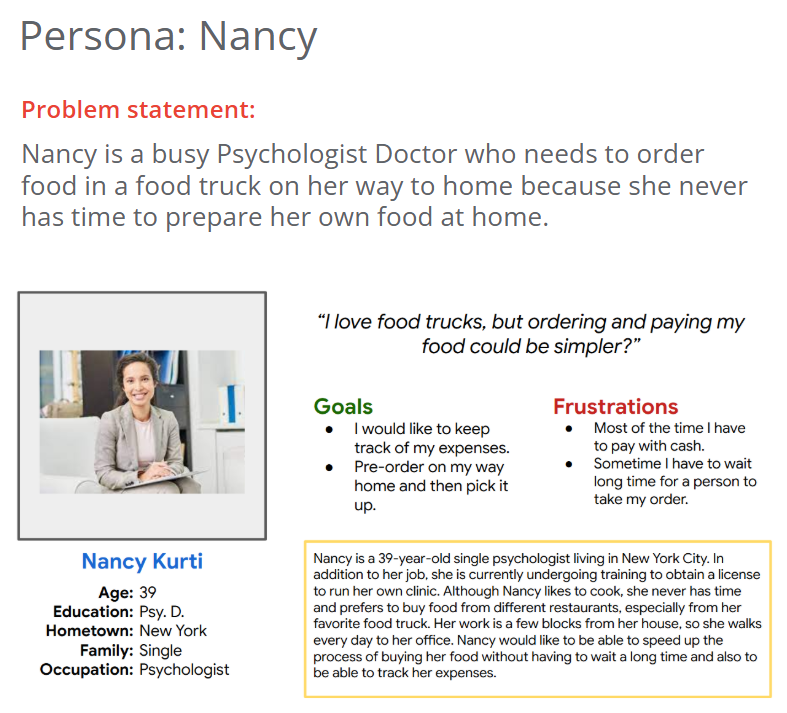
Persona: Nancy
Problem Statement
Nancy is a busy psychologist who needs to order food from a food truck on her way home because she rarely has time to prepare her own food.
Quote
“I love food trucks, but ordering and paying for my food could be simpler.”
Goals
Nancy wants to track her food expenses.
She wants to pre-order food on her way home and pick it up quickly.
Frustrations
She often has to pay with cash.
Sometimes she has to wait a long time for someone to take her order.
Summary
Nancy is a 39-year-old psychologist living in New York City. In addition to her job, she is working toward obtaining a license to run her own clinic. Although Nancy enjoys cooking, she often does not have time to cook at home and prefers to buy food from restaurants and food trucks. Her work is a few blocks from her home, so she walks every day to her office. Nancy would like to speed up the process of buying food without waiting in a long line, and she also wants a simple way to track her expenses.
User Journey Map
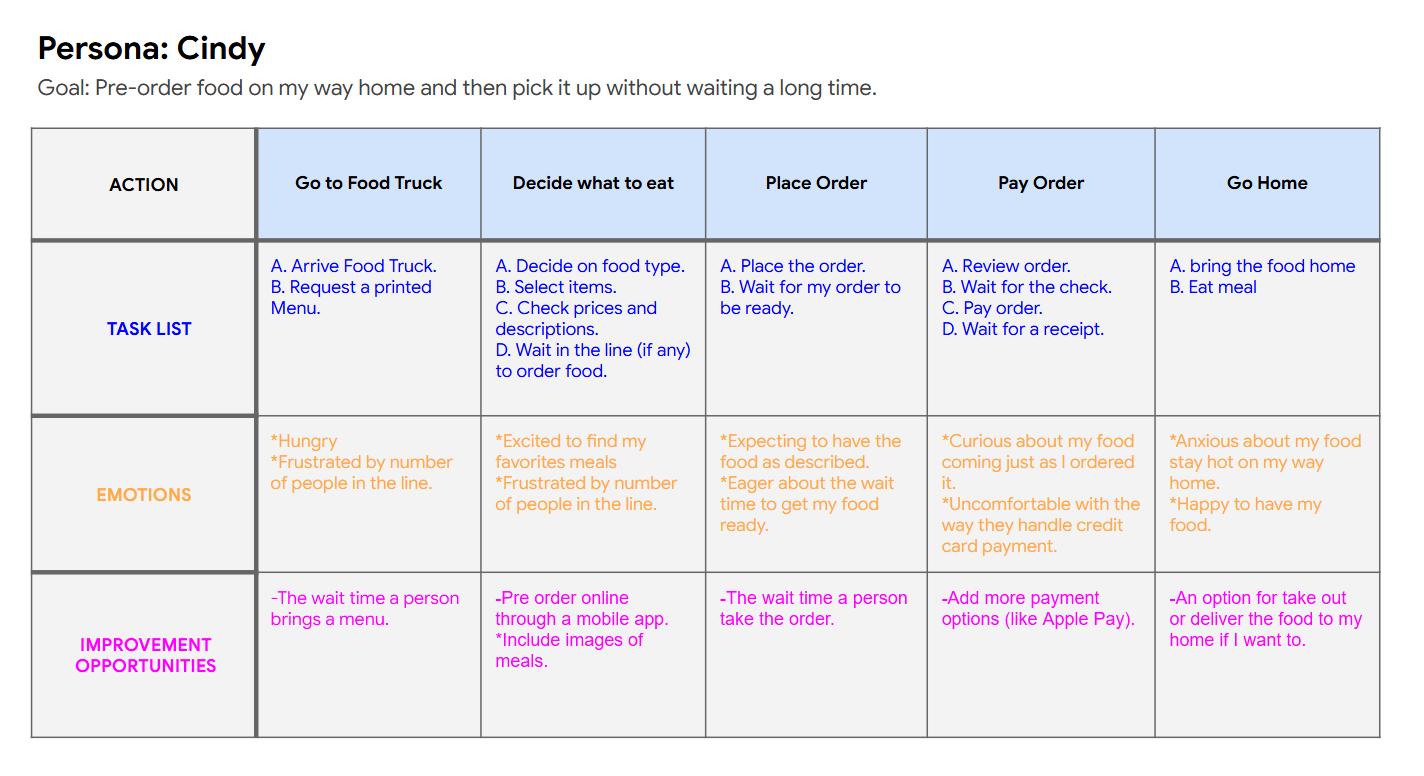
I created a user journey map to understand the full ordering experience from the user’s point of view.
The journey followed the user from finding a food truck, deciding what to eat, placing the order, paying, and picking up the food.
The main user goal was:
Pre-order food on my way home and pick it up without waiting a long time.
This helped identify friction points such as waiting for a printed menu, standing in line, unclear order status, limited payment options, and uncertainty around pickup timing.
The journey map helped prioritize features such as mobile ordering,
Storyboard
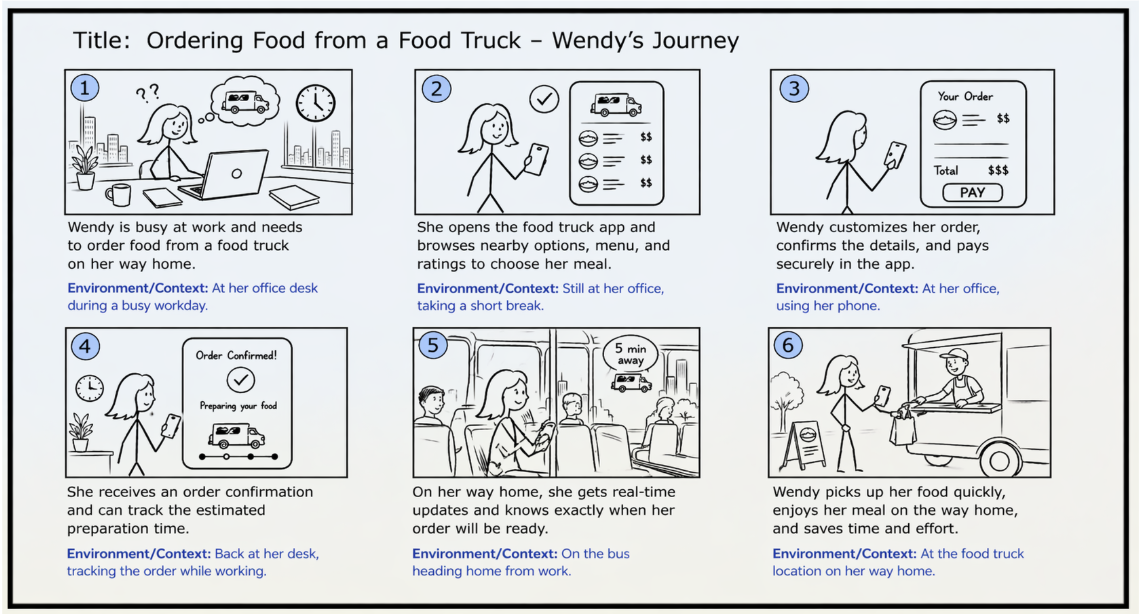
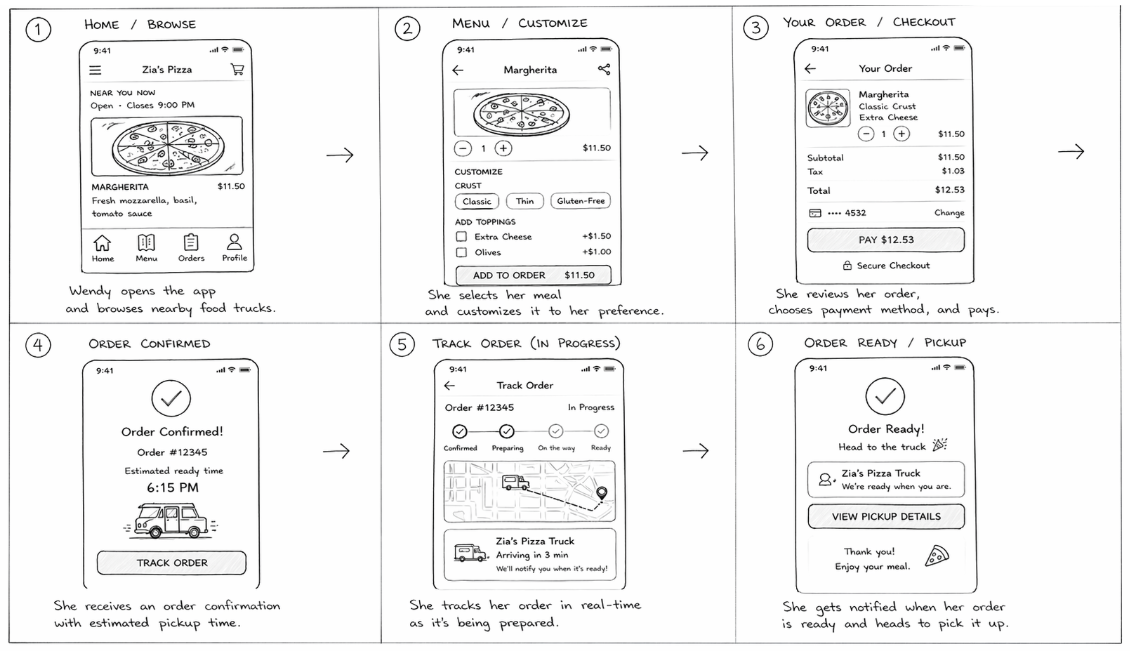
I created a storyboard to visualize how users would interact with the food truck app in a real-life situation. The storyboard helped me connect the user’s problem with the product experience by showing the steps of discovering a nearby food truck, placing an order in advance, paying through the app, and picking up the food without waiting in line. This helped guide the design direction and made the user journey easier to understand before moving into wireframes and prototypes.
User Flow
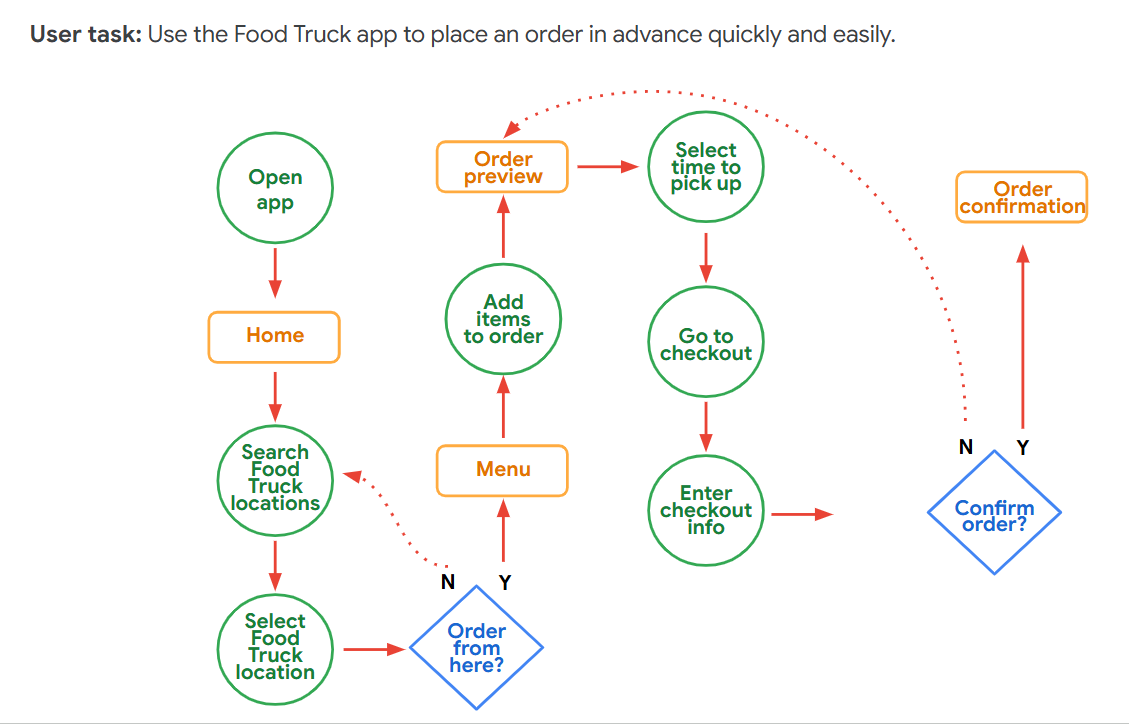
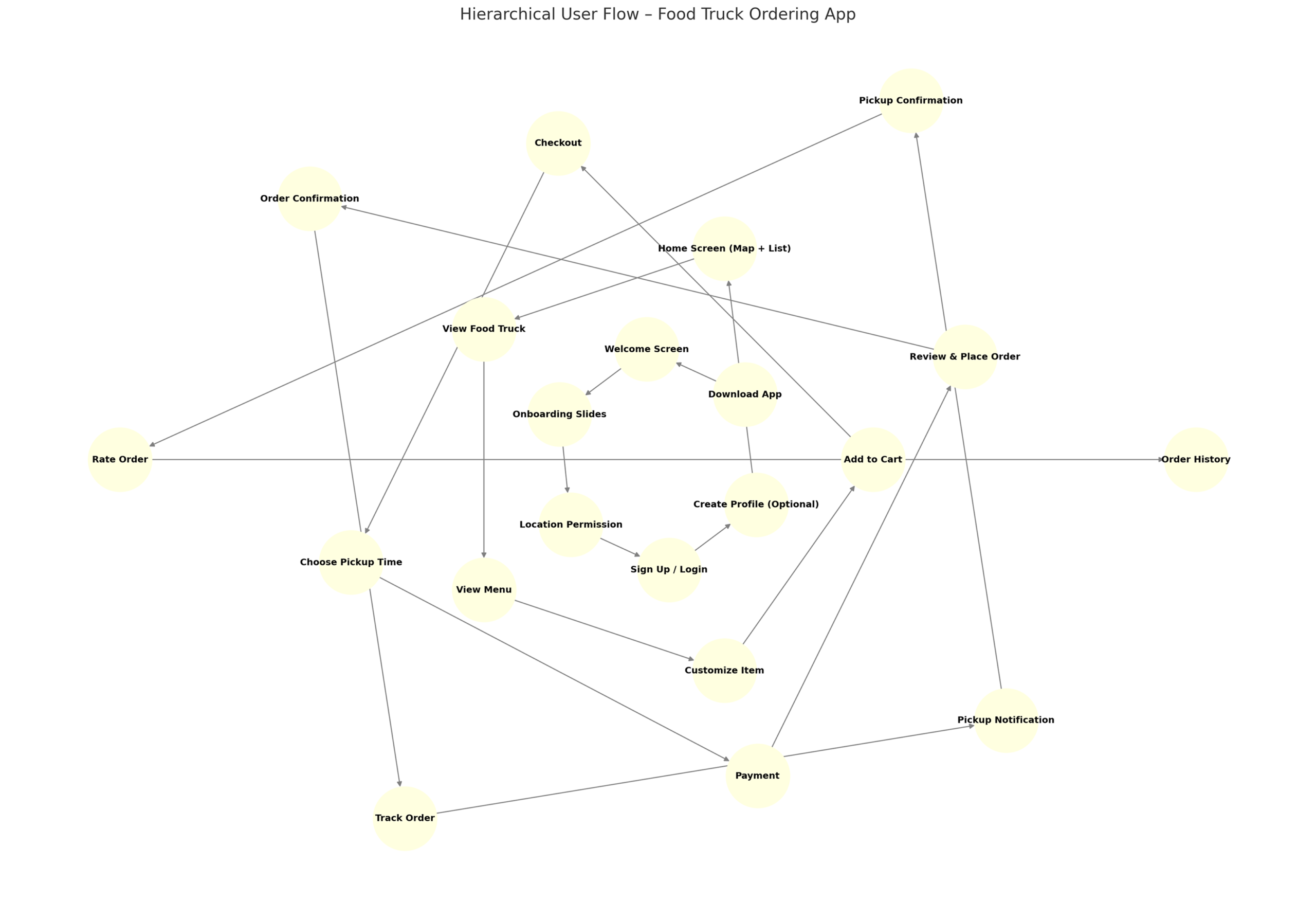
I created a user flow to map the steps users would take to place a food truck order in advance. The flow starts with opening the app, searching for nearby food trucks, selecting a location, browsing the menu, adding items to the order, reviewing the order, choosing a pickup time, completing checkout, and receiving an order confirmation.
This helped me identify the key screens needed for the app and clarify decision points where users may go back, change their selection, or confirm their order. The goal was to reduce friction and make the pre-order experience fast, simple, and easy to follow on mobile.
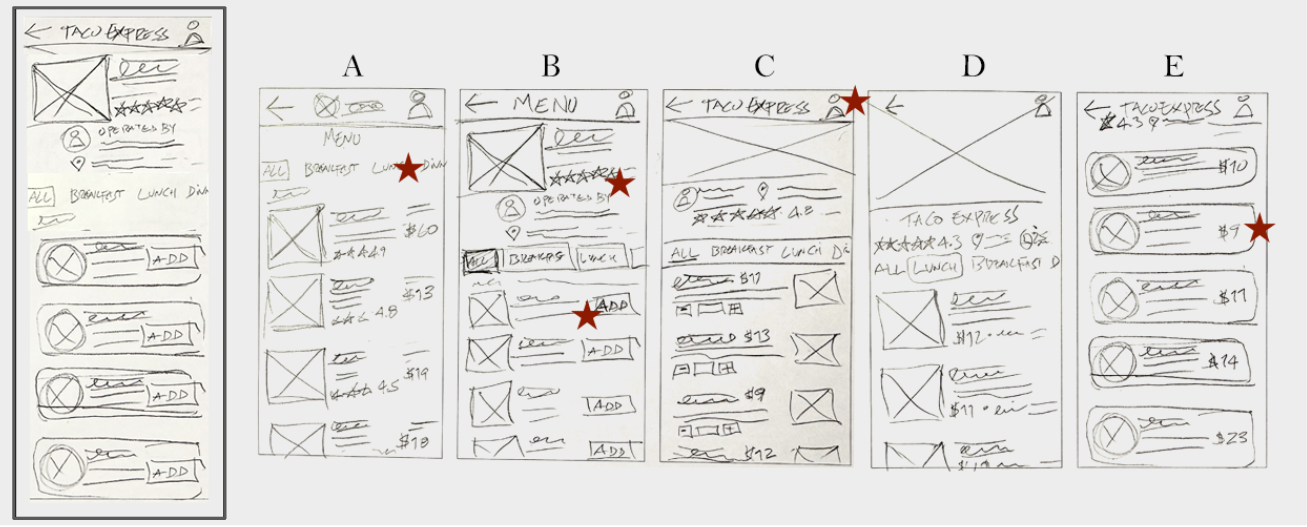
Paper Wireframes
I started the design process with paper wireframes to explore multiple layout options quickly.
This allowed me to compare different approaches for key screens, including nearby food trucks, food truck details, menu browsing, item cards, search, filters, pricing, ratings, and call-to-action placement.
Creating several versions of the same screen helped me identify which layouts were easier to scan and which structure could support a faster ordering flow.
Digital Wireframes
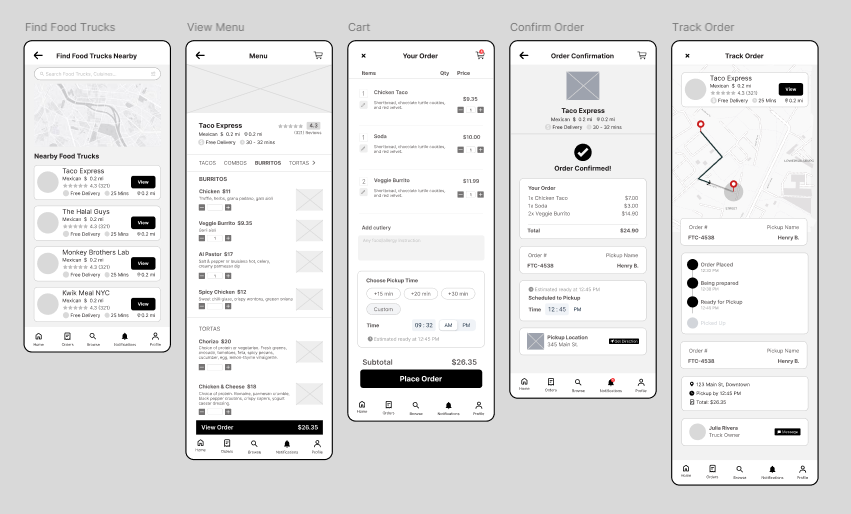
After reviewing the strongest paper wireframe ideas, I moved into digital wireframes to create a more structured mobile experience.
The early digital wireframes focused on making the app easy to scan, with clear search functionality, nearby food truck cards, simple navigation, and direct actions such as viewing a food truck, browsing the menu, and adding items to the order.
The goal at this stage was to keep the experience simple, fast, and aligned with the user research findings.
High-Fidelity Prototype
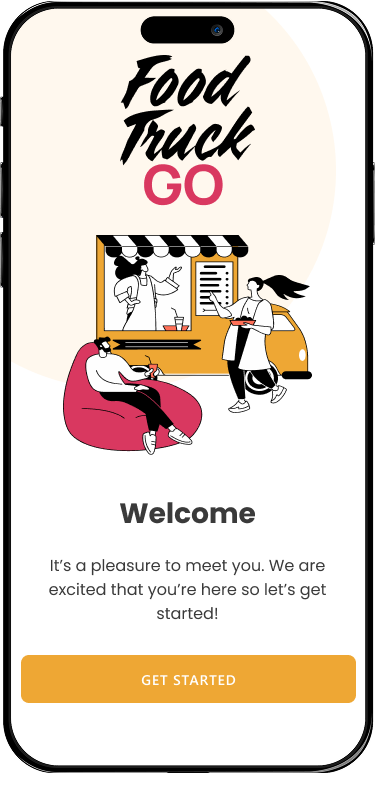
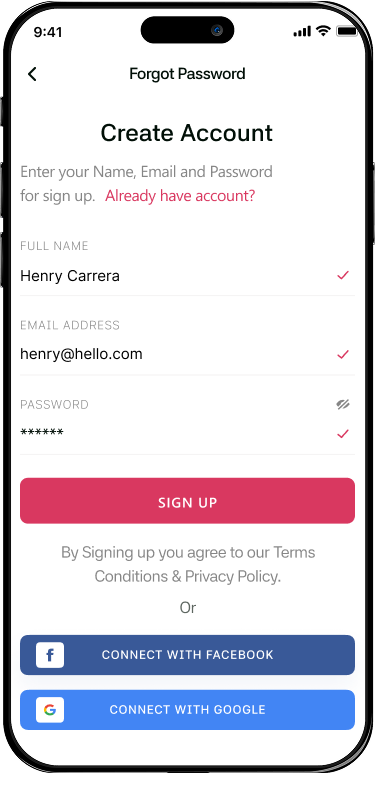
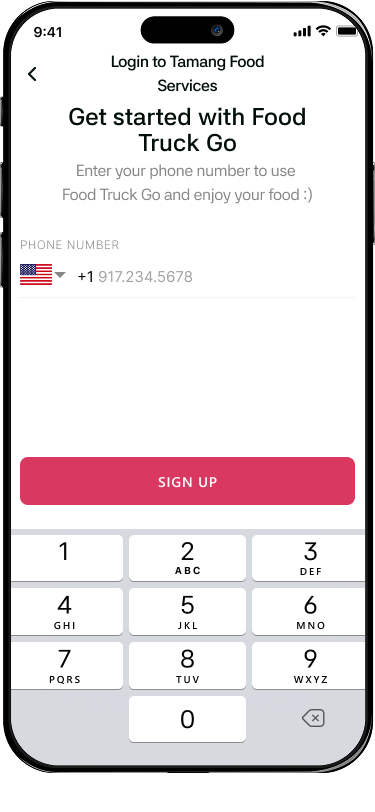
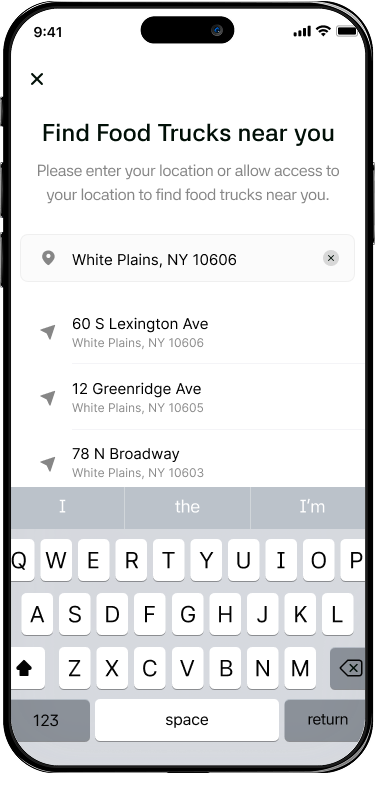
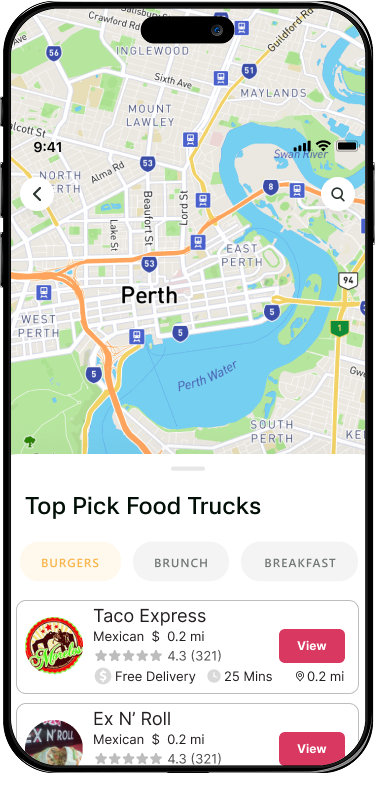
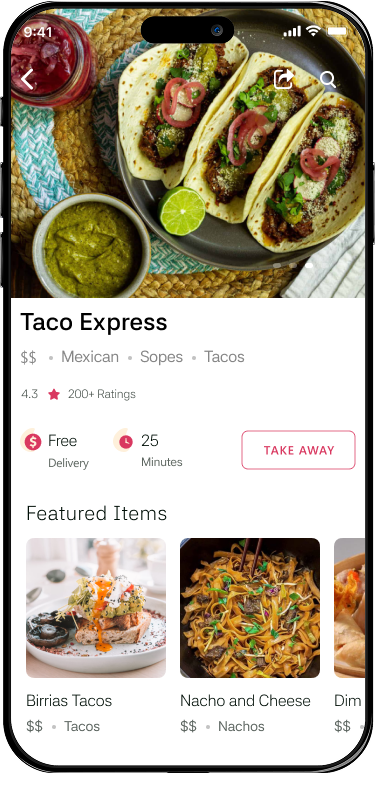
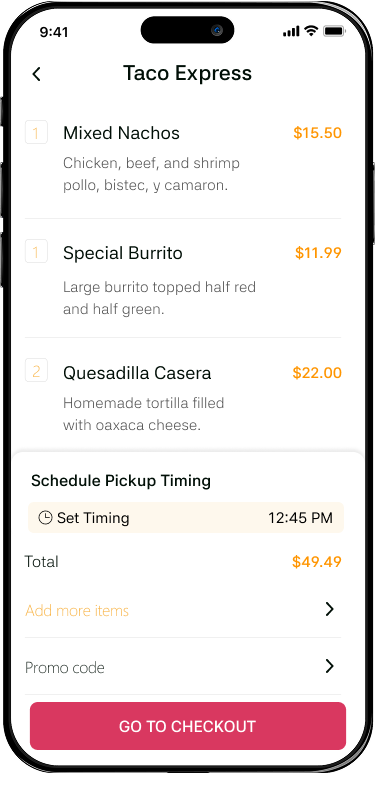
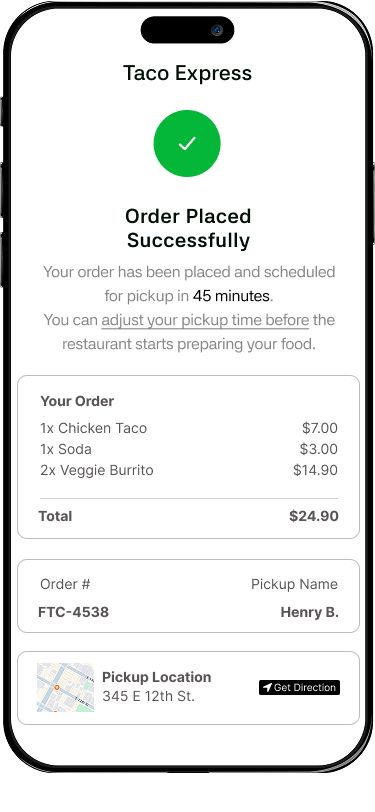
I created a high-fidelity prototype to demonstrate the final mobile ordering experience after refining the visual design and applying feedback from usability testing. The prototype connected the main screens into a realistic flow, allowing users to interact with the app as they would in a real product.
The goal was to validate the complete experience, including finding nearby food trucks, browsing the menu, adding items to the cart, choosing a pickup time, selecting a payment method, placing the order, and receiving a clear confirmation.
Outcome
The final design delivered a clear and user-friendly mobile ordering experience for an upscale food truck. The app helps users quickly find nearby food trucks, browse menus, place orders in advance, choose a pickup time, pay through their phone, and receive clear confirmation before pickup.
This project allowed me to apply the full UX design process, from user research and personas to wireframes, prototypes, usability testing, and final design refinements. The result is a mobile-first experience focused on speed, convenience, clarity, and reducing friction in the food truck ordering process.